
Network Goblin ND-1
A DIY handheld Ethernet cable & network tester built around a ~$2 PHY chip. Plug it into a drop and it tells you what's wrong: is the cable broken, where's the break, is it linking, is it getting DHCP, can it reach the internet, and which switch port am I plugged into?
The same tricks as a LinkRunner or Pockethernet, in your pocket, for a fraction of the price.
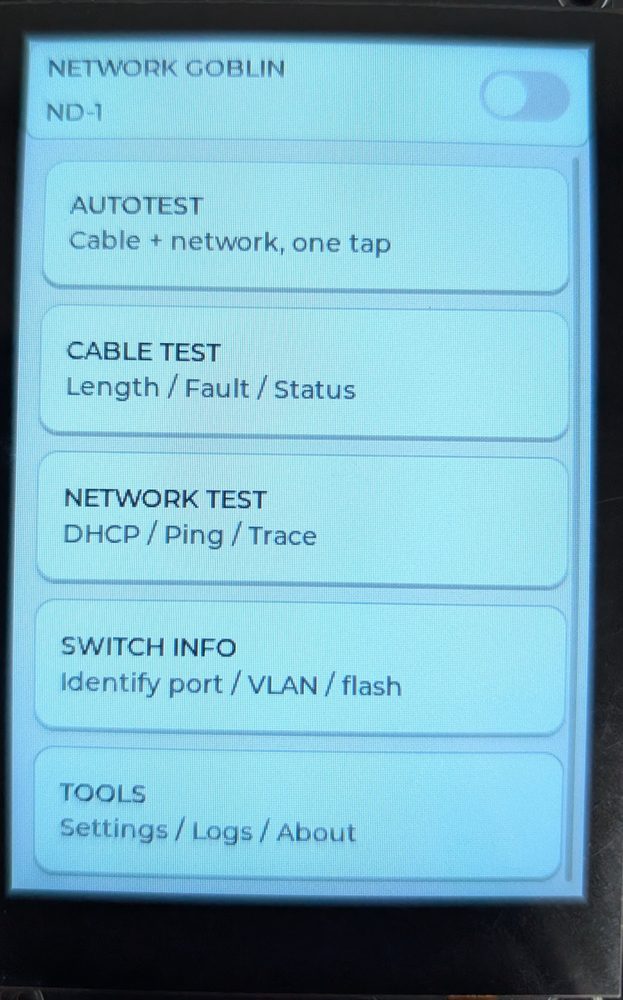
Status: working prototype. The dev-kit build is fully working. Rev C custom boards are ordered and being tested, so don't buy the PCB yet. A one-click web flasher arrives once the Rev C board is confirmed stable.
A $2 chip with a TDR engine
The Microchip LAN8742 Ethernet PHY has built-in Time Domain Reflectometry, the same technique expensive testers use to find cable faults, and you can drive it straight over the PHY management bus. Pair it with an ESP32, a touchscreen and a battery and you've got a real cable tester for pocket change.
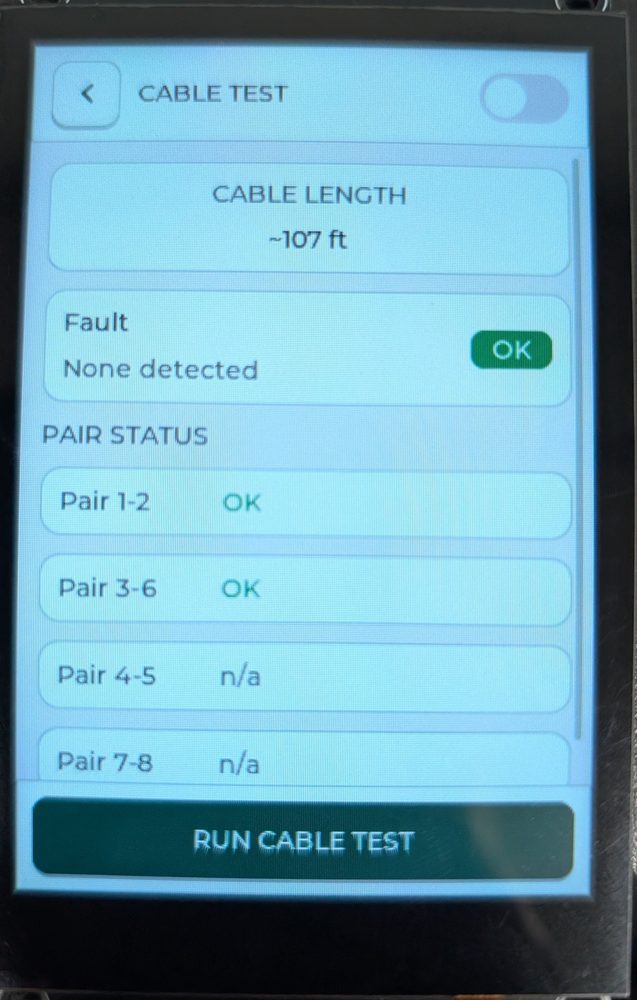
Cable faults (TDR)
Open, short or good on each active pair, with the distance to the fault in feet.
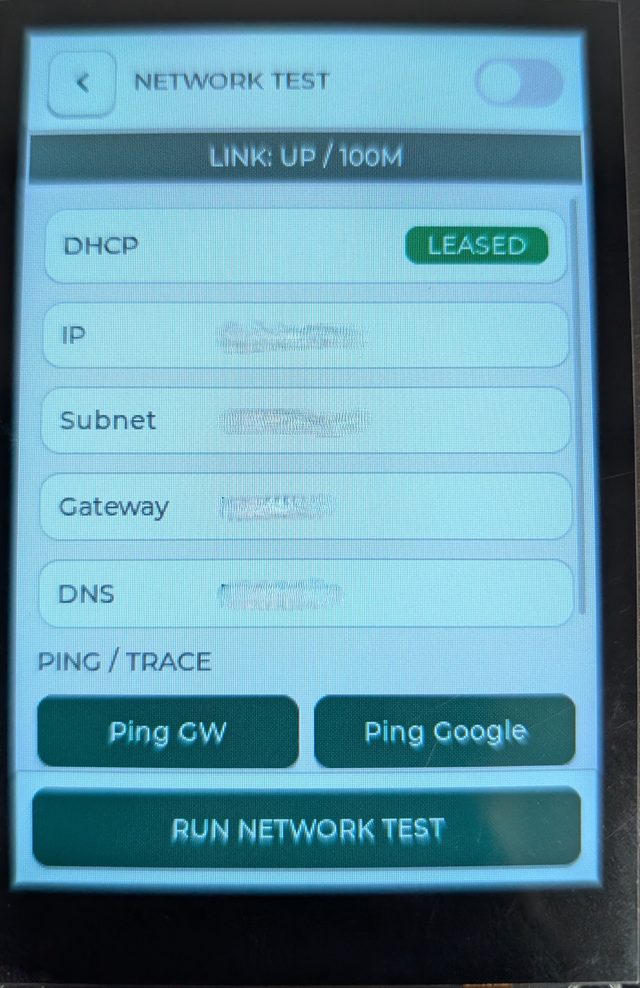
Link
Up or down, 10/100, full or half duplex.
DHCP, ping, traceroute
IP, subnet, gateway and DNS, then one-tap ping and trace to the gateway and the internet.
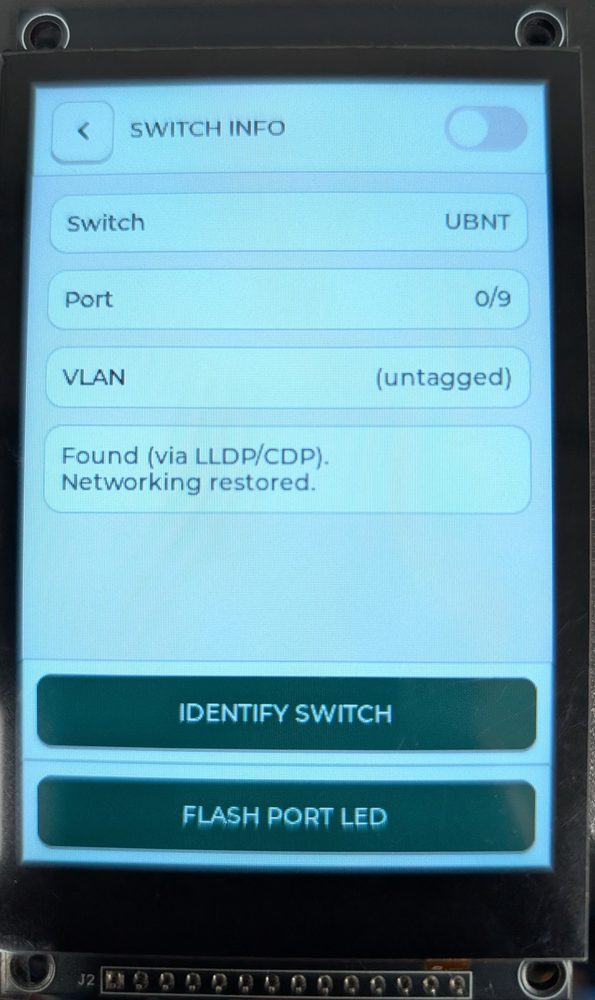
Which switch port?
LLDP/CDP shows the switch name, port and VLAN you're plugged into.
Port flash
Blinks the switch's port LED by cycling the link, so you can find your cable in the rack. No SNMP, no creds.
AutoTest
One button: checks the cable, and if it's good, pings the gateway and internet. PASS/FAIL plus cable length.
The real thing
Rough edges
- Cable length on a live link is a rough estimate for now (open-cable fault distance is accurate).
- Identifying the switch pauses networking for about 45 s, then restores it.
- Port flash depends on the switch: some (many UniFi) don't blink on link loss.
- Pairs 4-5 and 7-8 aren't driven at 10/100, so they show "n/a".
Coming up
- Custom ping and traceroute targets, typed on screen
- Calibrated live-link cable length
- Battery percentage on the custom PCB
- Result logging and screenshots to SD
- A web flasher here, once Rev C is confirmed
Build one from a dev kit
No custom PCB needed to try it today. Full wiring, parts links and the gotchas are in the README.
| ESP32 DevKit (WROOM-32) | Must be the classic ESP32: it has the Ethernet MAC. Not S3, S2 or C3. |
|---|---|
| LAN8720 RMII module | With the chip swapped for a LAN8742 (same footprint). That's what brings the TDR engine. A QFN hot-air job. |
| 3.5" SPI touchscreen | ST7796, FT6336U capacitive touch, 320×480. |
| Optional | LiPo and charger for untethered use. |
Big sibling: ND-2, the Linux-powered multitool. Open source under the MIT licence.